Architecture-first SDLC

Architecture is destiny. Code is just a consequence.

AI made coding faster. It did not make software delivery less chaotic.

Teams still lose context, shift responsibility, break production, accumulate security risk and waste money on rework because code starts before the system is properly designed.

Loytex fixes the root cause. It turns raw business intent into executable architecture: requirements, product logic, system design, API/data/event contracts, infrastructure, security, tests, code, evidence and human approvals connected from the first step.

Software is built from the architecture, not guessed from scattered prompts.

Working MVP · Architecture-first SDLC · Multi-agent delivery engine · Human-approved release

Screenshot of the Loytex Console workspace setup for a supervised SDLC run
Actual Loytex Console screenshot: workspace setup for a supervised SDLC run.
From intent to architecture From architecture to production Evidence linked from the first step Human-owned release decision

The problem

Software delivery is chaotic because teams build before they design.

Modern software teams are under constant pressure to move from idea to code as fast as possible. So the hard work is often skipped: clear requirements, functional design, buildable architecture, infrastructure feasibility, security context, test strategy, approval logic and release evidence.

At first, this feels faster. Then the cost appears.

  • Rework
  • Unstable production
  • Late security findings
  • DevOps firefighting
  • Audit friction
  • Missed deadlines
  • Unclear ownership
  • Blame between teams

AI coding assistants make this worse. They generate code faster, but they do not create the architecture required to build safely, verify correctly and release with confidence.

Without executable architecture, AI accelerates chaos.

The solution

Loytex makes software architecture executable.

Loytex transforms a raw business signal into a connected architecture model that the whole delivery process can follow.

This is not documentation after the fact. This is software delivery from architecture.

Business and product requirements Functional design Non-functional requirements UX flows System architecture API, data and event contracts Infrastructure assumptions Security controls Implementation plan Generated code Tests and conformance checks Approval chain and release evidence

Product

Loytex keeps software delivery connected from intent to runtime.

A signal enters Loytex. The system designs what must be built, generates the architecture, writes the code, creates the tests, checks security, prepares infrastructure, packages the release, routes human approvals and connects runtime monitoring back to the original intent.

Architecture is not a document in Loytex. It is the living control model of the delivery process.

That is the difference between AI code generation and AI-native software delivery. Loytex does not just help teams produce code faster. It helps them move from vague intent to running software without losing the design, security, operational and business context that makes software trustworthy.

Workflow

From signal to human-approved release package.

Loytex turns software delivery into a supervised system where every gate can stop the run, route targeted rework and preserve the decision trail.

01

Capture intent

A vague business idea, product signal or change request becomes structured requirements, risks, open questions and acceptance criteria.

Example generated decisions

Money calculations require deterministic services.

AI must not mutate financial records.

Human approval gates own release decisions.
02

Design the architecture

Specialized agents generate the connected delivery model: requirements, UX flows, system context, component architecture, contracts, infrastructure, security assumptions, tasks and test strategy.

03

Catch gaps before build

If functional design, architecture, API surface, data model, security assumptions or infrastructure constraints do not match, the run routes targeted rework.

Example gate finding

API contract is thinner than the functional endpoint surface.

04

Generate and verify implementation

Loytex produces code and tests, then checks implementation against requirements, architecture and contracts.

05

Attach evidence

Security and quality checks attach scanner output, findings, triage records, rework history, quality evidence and control evidence to the same architecture graph.

06

Package the release for human decision

The final output is a reviewable release package with full traceability. Loytex does not autonomously push to production.

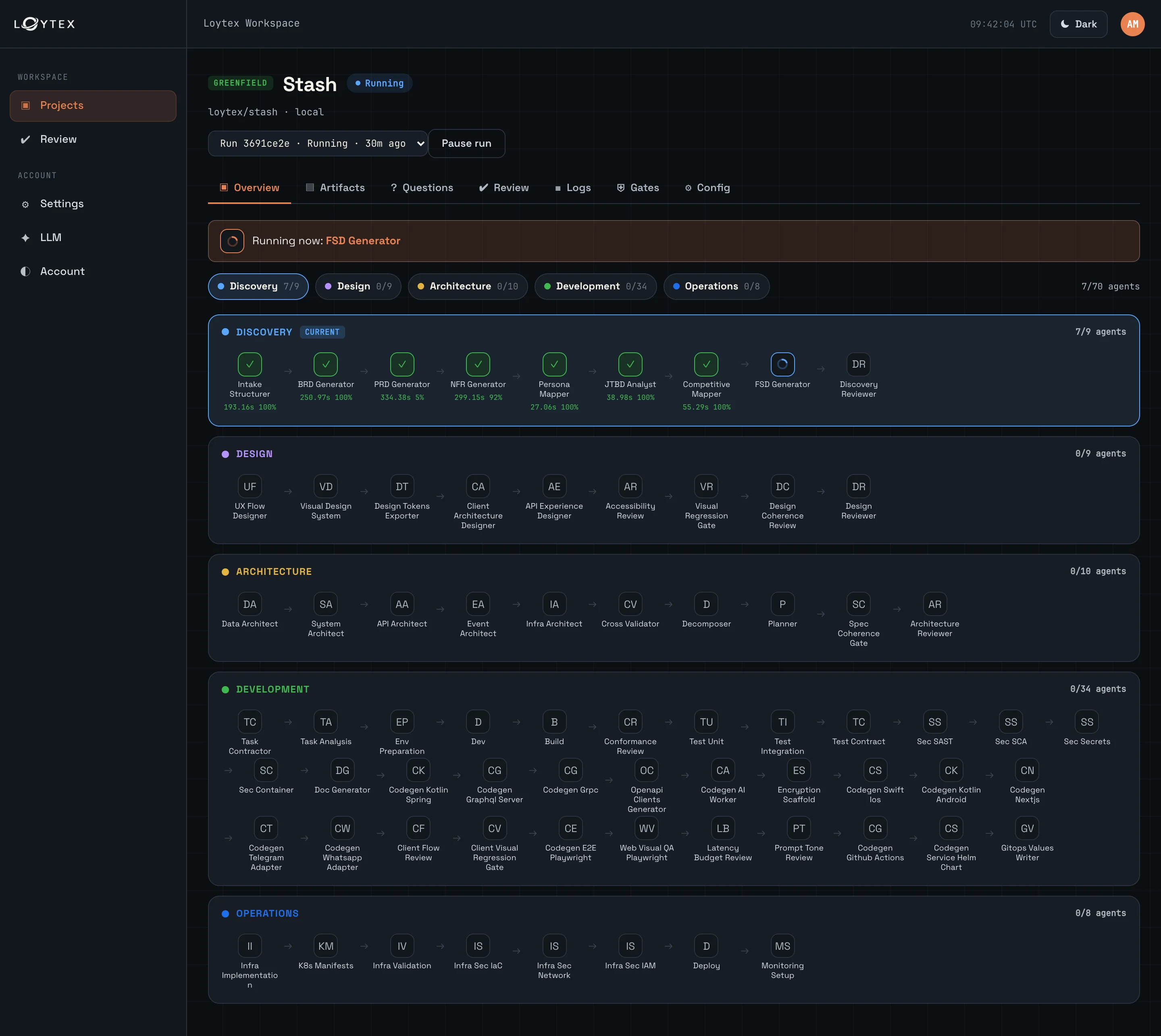
Loytex Console live run overview: the five-phase pipeline from discovery to operations with per-agent status, timing and gates for a single supervised run.
Actual Loytex Console screenshot: supervised run overview from discovery to operations.

What the team receives

A reviewable delivery package, not a black-box AI answer.

Each run produces a structured SDLC package. Everything stays connected to the original business signal.

Reviewers can inspect what changed, what was checked, where the system stopped, what was reworked and who approved the next step.

Contact Alexander
sdlc-package/ human-approved
  • 01
    Requirements and functional designBRD, PRD, NFR, user stories, acceptance criteria and open questions
    SPEC
  • 02
    ArchitectureUX flows, system context, component architecture, API, data, event and infrastructure views
    ARCH
  • 03
    Build artifactsImplementation plan, generated code, tests, conformance checks and delivery notes
    BUILD
  • 04
    Security and quality evidenceScanner output, findings, triage records, rework history, quality evidence and control evidence
    SCAN
  • 05
    Approval chainGate history, reviewers, decision owners, release decision and audit-ready record
    LOG

Why now

AI changed the cost of coding. Now the bottleneck has moved upstream.

The market is moving from AI-assisted coding to architecture-driven development. Developer tools are beginning to generate requirements, designs and implementation tasks inside the IDE. That proves the direction is right.

But enterprise delivery is bigger than the IDE. Real organizations need shared context across business, product, architecture, engineering, security and operations.

  • Architecture before implementation
  • Traceability from business intent to code and tests
  • Infrastructure feasibility before release
  • Security before production pressure
  • Evidence before audit
  • Human accountability before deployment

Why Loytex is different

AI coding assistants optimize the developer loop. Loytex optimizes the delivery system.

Loytex is not a code assistant, a documentation generator or a compliance wrapper. It makes software architecture executable.

AI coding assistants

Faster code generation

Missing: requirements, architecture, evidence and cross-role delivery context.

AI IDE planning tools

Developer planning from requirements and tasks

Missing: enterprise SDLC, security, infrastructure, approvals and release evidence.

DevOps and CI/CD tools

Build, test and deploy automation

Missing: upstream intent, architecture quality and design correctness.

GRC tools

Audit and controls

Missing: actual software creation and implementation traceability.

Loytex

Full SDLC from intent to release package

Principle: implementation follows the architecture. Boundary: production release remains a human decision.

Proof

The working MVP already produces full SDLC reference runs.

In preserved internal reference runs, Loytex generates and links the core artifacts required to move from business intent to implementation and release review.

Included in the reference run
  • Requirements, functional design and architecture diagrams
  • API, data and event contracts
  • Implementation plan, code and tests
  • Security checks and conformance review
  • Traceability graph, approval and release evidence
Bounded claim

This is internal technical proof that the factory can generate, connect and review the delivery artifacts that teams normally assemble manually.

It is not a projected customer outcome. Production deployment remains a human decision.

Reference run visuals

Architecture views created before implementation.

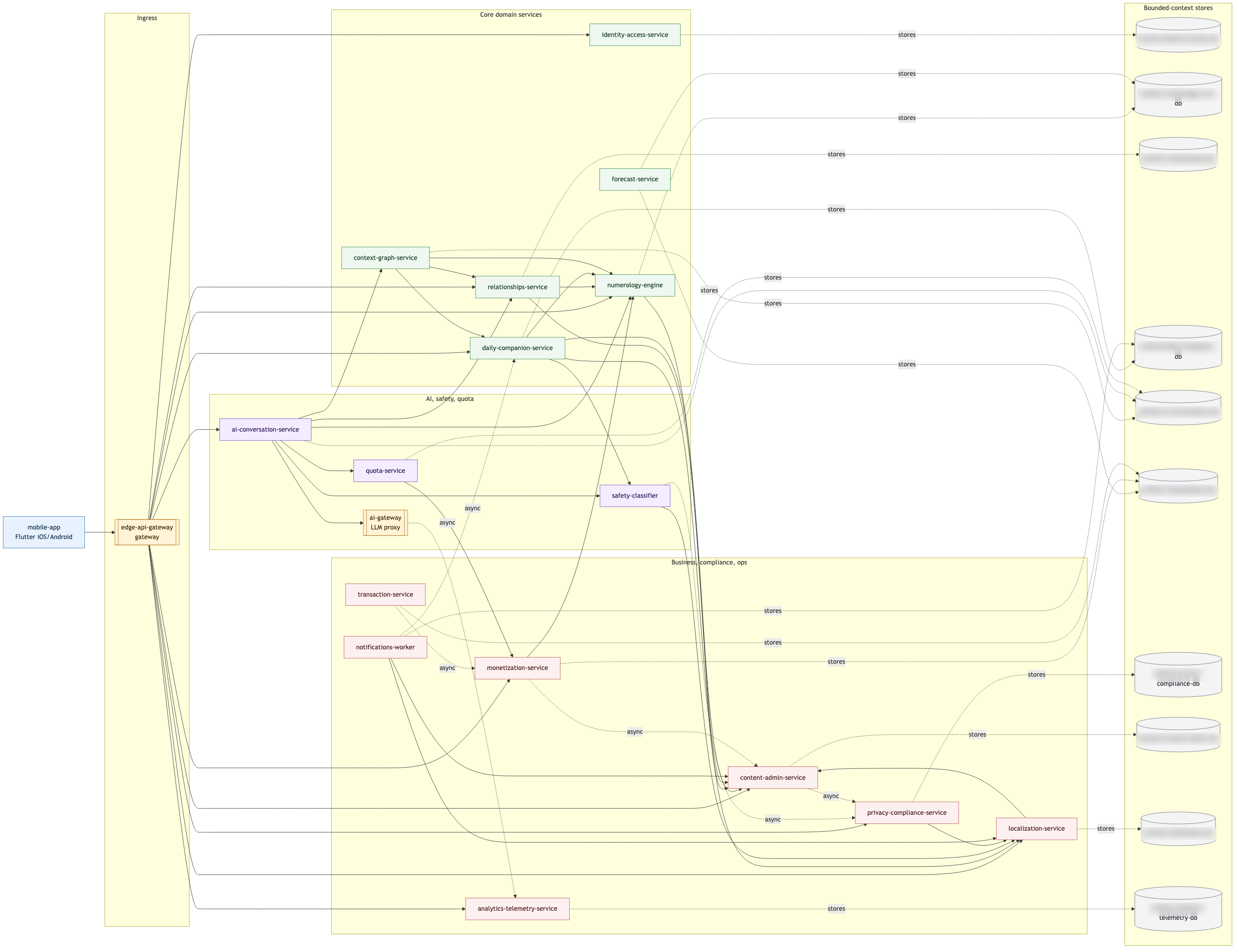
System context diagram with actors, services and external systems
System context diagram with actors, services and external systems.
Component architecture diagram with service boundaries and data stores
Component architecture diagram with service boundaries and data stores.
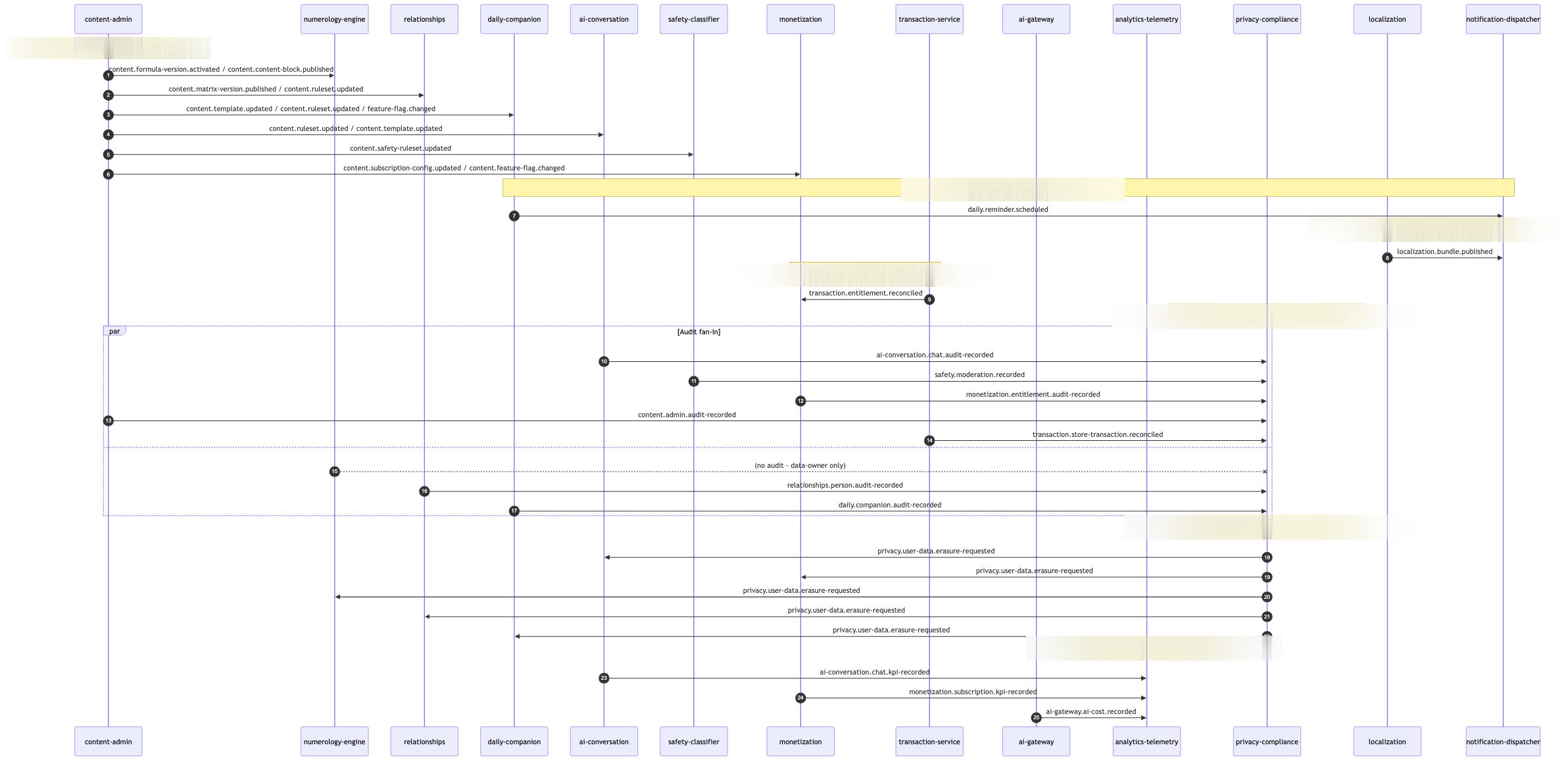
Event-flow diagram with ordered domain events and audit fan-in
Event-flow diagram with ordered domain events and audit fan-in.
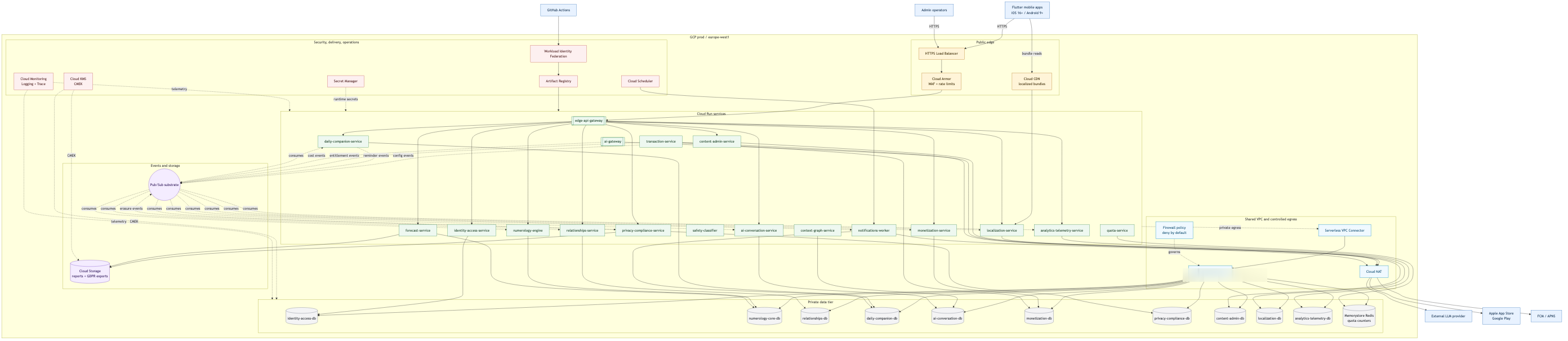
Infrastructure architecture diagram with cloud, network and delivery boundaries
Infrastructure architecture diagram with cloud, network and delivery boundaries.

Regulated and complex product teams feel the pain first.

Loytex is especially valuable where software changes require speed and high confidence before release.

Fintech Payments Banking Insurance Cybersecurity Enterprise SaaS Internal platforms AI-enabled business applications

These teams cannot rely on vibe coding. They need speed, but they also need architecture, controls, evidence, auditability, security and accountability.

Governance is built in

Automation does the work. People own the decision.

01

Architecture-first execution

Implementation is judged against explicit requirements, functional design and architecture, not only against passing tests.

02

Blocking quality gates

Requirements, contracts, tests and findings can stop the run and route targeted rework.

03

Human-approved release

Merge and production deployment are explicit human decisions, not autonomous agent side effects.

04

Audit-ready evidence

Functional design, approval chains, security evidence, change records and release decisions are generated as part of delivery.

Alexander Markov

Founder

Built by someone who has owned the risk.

Alexander Markov · Security and technology executive

Loytex was built by Alexander Markov, a security and technology executive with more than 20 years of experience across Fortune 500 banks, large enterprise environments, regulated fintech and high-growth companies.

Alexander has operated at the level where software delivery failures become business risk: security incidents, regulatory exposure, failed audits, production instability, DevOps firefighting, unclear accountability, expensive rewrites and loss of executive confidence.

View LinkedIn

Vision

Loytex exists to ensure great, highly impactful ideas become real!

We are entering a new DIY era for everything. AI is turning people from passive users of technology into architects of new products, services, companies and ultimately, the future itself.

For decades, great ideas were held hostage by massive budgets, technical gatekeepers and bloated roadmaps. Most ideas died not because they lacked merit, but because the friction of execution was too high. The path from intent to execution was simply too slow, too expensive and too complex.

That era is over.

Walk through a real reference run.

See how Loytex turns one business signal into a connected SDLC package: requirements, functional design, architecture, contracts, implementation plan, code, tests, security evidence and human approval gates.

Request a reference-run walkthrough Or email alex@loytex.io